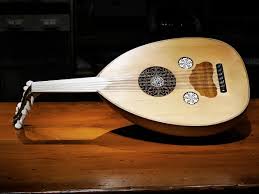
I wanted to introduce possibly a new instrument to you, which is the Oud.
The oud (Arabic: عود ʿūd [ʕuːd]) is a short-neck lute-type, pear-shaped stringed instrument (a chordophone in the Hornbostel-Sachs classification of instruments) with 11 or 13 strings grouped in 5 or 6 courses, commonly used predominantly in the music of Egypt, Cyprus, Syria, Lebanon, Palestine, Jordan, Iraq, Iran, …
This is what a pair and/or two eighth notes together looks like.
When you see two individual eighth notes, please pair them together. Please keep this in mind as you watch this next video, which focuses on the eighth note.
Warmly,
Ms. Wilder
Assignment:
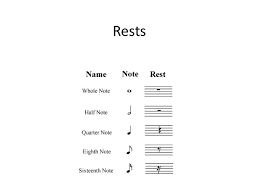
Using Whole Notes, Half Notes, Quarter Notes, and Eighth Notes, please put them together to equal four.
Please remember and memorize the value of these notes.
Putting them together to equal four would look like this.
Here is some helpful information for you and your child and/or children to assist with making and reading music. Please feel free to write these notes on note cards and have you and your child and/or children utilize these cards to make and read music and/or please feel free to write the notes on a piece of paper.
We have been working often this year on learning these notes in our music classes and were working so hard in class. I know that you will continue your learning of making and reading music in this new way. Please feel free to email me any questions you might have.
Warmly,
Ms. Wilder
Lesson Two
Continuing learning the Whole Note, Half Note, and the Quarter Note
Assignment
Please put together whole notes, half notes, and quarter notes into different combinations to equal four.
For example:
This example uses four quarter notes. Please add them up together and you will get four.
The information on this video will assist you and your child and/or children in the study of music theory, which involves music symbols, notes, and rests. The activities included on this page will help you be able to recognize these music symbols, notes, and rests. Also, you will be able to create and/or make your own music and you will be able to read and/or read the music you make.
Warmly,
Ms. Wilder
Learn to Read Music – Lesson One
Whole Note, Half Note, and the Quarter Note
Assignment
On a piece of paper, draw whole notes, half notes, and quarter notes.
After reading up about the Darbuka drum from my last post, I felt like you would enjoy actually hearing some examples of the rhythms that are played on the Darbuka Drum.
The darbuka, also called doumbek or derbeki, is a traditional goblet-drum known for being the foremost percussion instrument in Middle Eastern music. Its single head and goblet shaped body distinguishes it from other similar instruments such as the Indian tabla and pakhawaj and Middle-Eastern frame drums like the tar. Deriving geographically out of Turkey, Armenia and Egypt, the darbuka’s roots are in Oriental Music where distinguished beats and rhythmic resonance are quite common. The darbuka achieves its unique sonic qualities by both the way that it is played as well as how it is constructed.
Just how each musical instrument has its own language, or bol, which communicates a specific rhythmic pattern. The versatility of darbuka music is understood when it has been practiced for many years. More possibilities of how it can be played are constantly being discovered including not just Eastern beats but Western styles as well. The drum beautiful sound and resonance can be attributed to the goblet-shape of its body, a shape ideal as a resonant chamber for sound across all frequency ranges. Larger drums offer a louder and deeper tone compared to smaller ones that are much softer and quiet but each has its moment and place.
There are many different kinds of darbukas available in the world, each containing unique notes and sounds. The most typical regional variants of the drum are Egyptian, Turkish, Oriental, and Arabian, each complementing the rich cultural diversity from which it comes. The traditional materials used to make the drum body are clay, wood or occasionally, metal, and the heads are made with goat skin stretched over the top to make the drum head. Modern darbukas are made with metal bodies and synthetic/plastic heads.
I found an interesting Educational Enrichment Music Video for you to watch. This highlights instruments from the percussion family, which entails many times of drums and other instruments, as well. Please enjoy watching the Jalikunda African Drums perform at the Monsterrat African Music Festival.